Day 1: Algiers Airport Pick-up
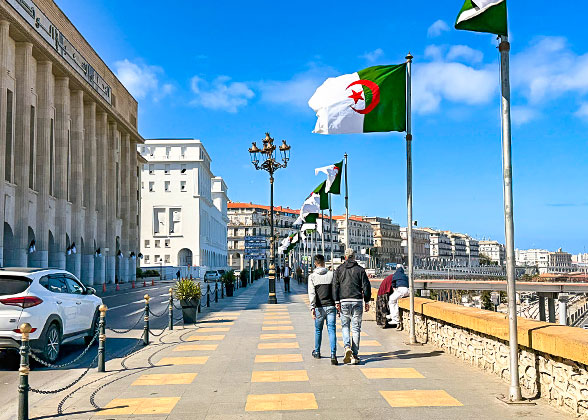
Welcome to Algiers, the capital of Algeria! Upon your arrival at the airport, your private driver will greet you and escort you to our carefully selected downtown hotel. The rest of the day is yours to adjust to the time difference at the hotel or to explore the city’s unique charm, a blend of French elegance and Arabic culture, on your own. ► Why You Need Our Guided Tour to Algeria 1. Most travelers, including those from the United States and Europe, need a visa to enter Algeria, which requires a detailed travel itinerary and is issued strictly based on your trip duration. Since the process typically takes one to two months, we can help by providing an itinerary that meets official requirements to facilitate your smooth entry. Although Algeria has piloted a visa-on-arrival option in some regions, it involves processing through designated travel agencies, which might be inconvenient for independent travelers. 2. Foreign tourists traveling between cities in Algeria will often face frequent checks involving form-filling and passport presentation. A local guide can assist you in completing these procedures smoothly and efficiently. 3. Algeria’s main languages are Arabic, French, and Berber. English is not widely spoken, which may pose challenges for independent travelers due to language barriers. 4. In Algeria, tourists must have a licensed local guide to visit specific areas, including the Sahara Desert and certain old town communities. 5. Being the largest country in North Africa, Algeria features widely spread historical sites and natural wonders. Public transportation in remote areas is limited, so using a private car is often the most convenient option for travel. 6. Algeria’s history, culture, and customs are intricate, shaped by Arabs, Berbers, the Roman Empire, and French colonization. With our escorted Algeria tour, you can gain more detailed insights into local traditions and have a better overall experience. Accommodation: Hotel El Aurassi, Algiers (4 stars) or similar
|
Day 2: Algiers Martyrs Memorial & Basilica - Tipasa Roman Ruins & Royal Mausoleum - Algiers Kasbah
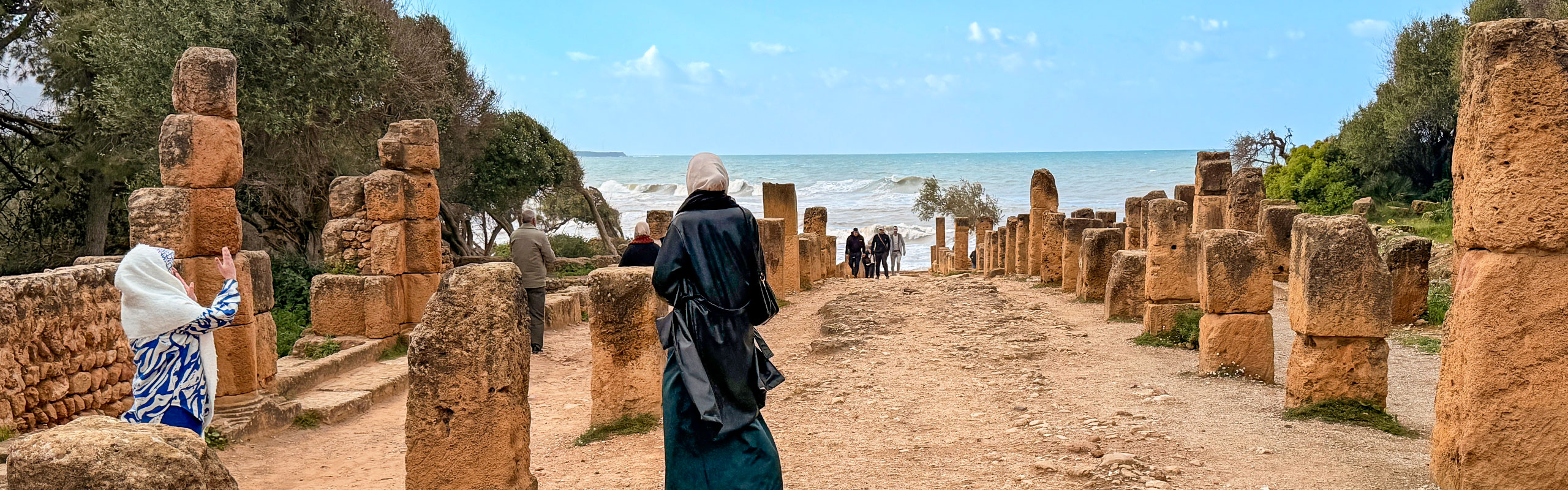
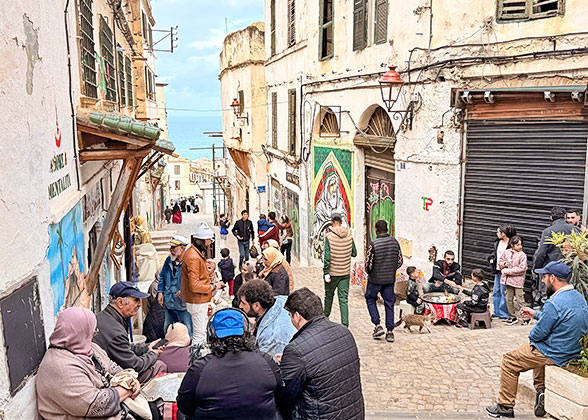
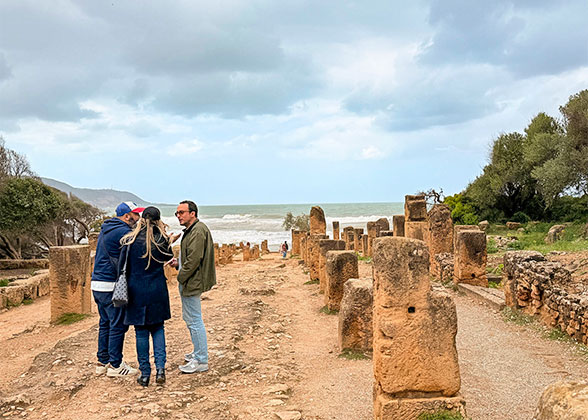
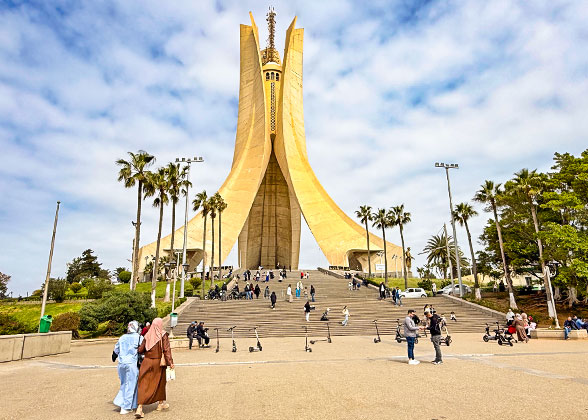
Djemila Roman Ruins, Setif This morning, your private guide and driver will meet you at your hotel for a tour of Algeria’s rich history, exploring ancient sites in Algiers and Tipasa. First, visit the Martyrs Memorial, a 92-meter-high (300 ft.) monument shaped like three palm leaves, standing atop Hama Hill and overlooking Algiers and the vast Mediterranean Sea. Erected in 1982, it commemorates those who sacrificed their lives in the Algerian War of Independence, which lasted 93 months from 1954 to 1962 and resulted in the deaths of over 300,000 Algerians, leaving an indelible scar on the country. At the National Museum of Moudjahid at the foot of the monument, we will gain a direct understanding of the war’s details and its profound impact on Algeria. Then, we’ll continue to the Basilica of Notre-Dame d’Afrique, perched on a 124-meter (410 ft.) cliff. In a country where approximately 99% of the population is Muslim, a Christian church might seem out of place; nonetheless, the basilica, built in 1858, reflects Algeria’s blend of cultures and religious acceptance, with both Neo-Byzantine domes and Arabic-style mosaics. Inside, you’ll see the sacred bronze statue of the Virgin Mary, who greets visitors with open arms, symbolizing a welcome to people of diverse faiths and backgrounds. Behind her, the inscription reads: “Our Lady of Africa, pray for the Muslims and for us.” Next, let’s drive for about an hour along the Mediterranean coast, enjoying the orchard scenery, to reach Tipasa— a UNESCO World Heritage Site renowned for some of North Africa’s best-preserved Roman ruins. Two thousand years ago, baths, temples, and an amphitheater were built here, making Tipasa one of the most prominent Roman cities in the region. As the well-known French philosopher Albert Camus (1913-1960) observed, Tipasa is not only “the flower-covered ruins” but also “inhabited by gods.” Today, archaeological excavations have only uncovered a small part of the site; much of it remains buried underground, awaiting future discovery. Additionally, we’ll visit the Royal Mausoleum of Mauretania. This impressive stone tomb, standing 30 meters (100 feet) tall, is the final resting place of Queen Cleopatra’s only daughter. During her reign over the ancient Mauretanian Kingdom (3rd century BC - 40 AD), she played a significant role in the Romanization of North Africa, thanks to her strong Hellenistic and Roman cultural influences. After returning to Algiers, our final stop today is the Kasbah Ancient Town, originally a 10th-century AD small fortress that is now a UNESCO World Heritage Site. As you ascend the stone steps through the maze of narrow alleys and streets, with white buildings tightly packed on the hillside, you may turn a corner and be greeted with a stunning view of the blue sea. This old town is akin to a living history book, with its historical story ongoing. Having witnessed the rise and fall of many eras, it remains an inseparable homeland for its residents. Finally, your guide and driver will escort you back to your hotel. Meals: Breakfast, Lunch Accommodation: Hotel El Aurassi, Algiers (4 stars) or similar Tipasa Roman Ruins Algiers Martyrs Memorial
|
Day 3: Algiers to Bejaia: Hike in Gouraya National Park
Today, your guide and driver will join you for a 3-hour private drive from your hotel to the beautiful coastal city of Bejaia. During this trip, you can relax and enjoy the scenic views of the lush orchards and olive groves.
Upon arrival, we will visit Gouraya National Park, a UNESCO-listed biosphere reserve, famous for its stunning mountain scenery, coastal cliffs, and rich biodiversity that attracts hikers and nature lovers alike. Follow your guide on a 2- to 3-kilometer (1-2 mi.) hike to Pic des Singes (Monkey Peak), which takes about an hour and includes sightseeing and photo breaks. Though the climb might be tiring, the gentle sea breeze, lush hills, and playful Berber macaques in the forest can make the walk enjoyable. Once at the top, you’ll enjoy a spectacular view of the rugged Cap Carbon cliffs and the expansive blue Mediterranean Sea. Afterward, your guide and driver will transport you back to your hotel in Bejaia.
Meals: Breakfast, Lunch
Accommodation: Hotel Atlantis Bejaia (5 stars) or similar
|
Day 4: Bejaia - Djemila Roman Ruins - Constantine
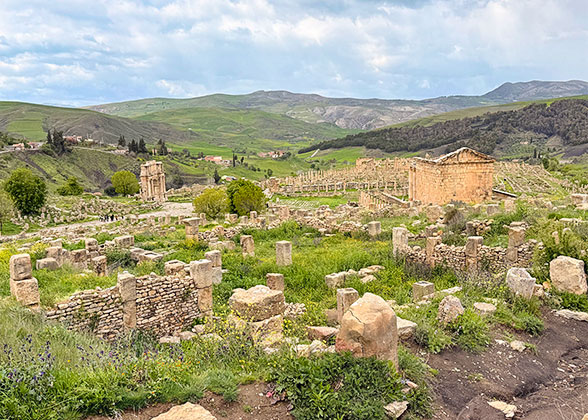
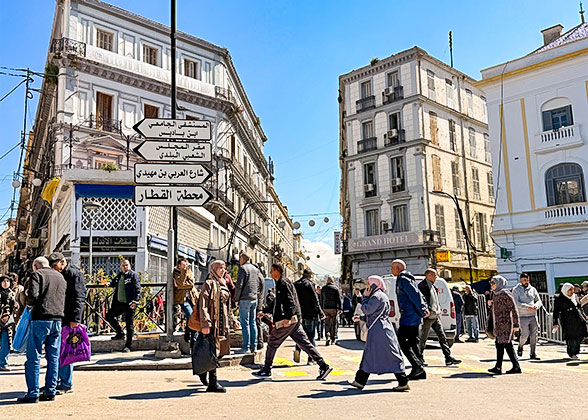
Not many know that Algeria hosts one of the world’s largest collections of Roman ruins, ranking second only to Italy. This morning, your guide and driver will pick you up from your hotel for a 3.5-hour drive to explore the stunning Djemila Roman Ruins. Like Tipasa, Djemila was a thriving city established by the Roman Empire (27 BC - 1453 AD) along the Mediterranean coast north of the Sahara Desert. Its buildings sit on a hillside, showcasing Roman skill in urban planning amid rugged, mountainous terrain. Walking among tall or crumbling ruins, surrounded by lush trees and mountains, you’ll be transported to that glorious period—the visible cart ruts depict scenes of busy tradespeople, the large theater, which once accommodated 3,000 spectators, probably echoed with gladiatorial shouts, and beneath the still-standing 12.5-meter-high (41 ft.) arch, the cheers of soldiers once resonated. After the visit, we will continue driving for two more hours to reach your hotel in Constantine. Your guide and driver will assist you with check-in. ► Dinner Recommendation (at your own expense) Igherssan Restaurant, located on a cliffside, is one of Constantine’s top destinations for both locals and visitors, just a 10-minute walk east of your hotel. Don’t miss their signature Tajines, which feature stewed vegetables or seafood seasoned with various spices and cooked in a traditional North African vessel with a tall, hat-shaped lid. Pairing it with a cup of classic Algerian Mint Tea is highly recommended. Average Cost per Person: about USD 10-15 Address: 58 Rue Larbi Ben M’Hidi, Constantine Meals: Breakfast, Lunch Accommodation: Novotel Constantine (4 stars) or similar Djemila Roman Ruins Constantine Street View
|
Day 5: Constantine Highlights: Bridges, Cirta Museum, Great Mosque, Old Town; Fly Back to Algiers
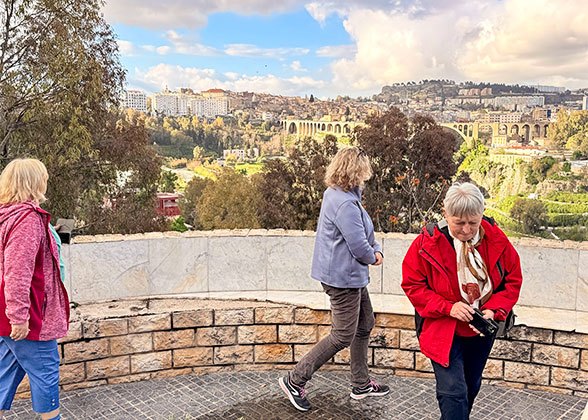
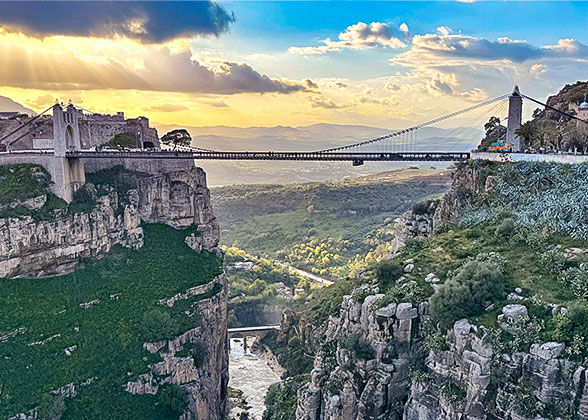
Today, your guide and driver will meet you at your hotel to explore Constantine, where visitors are often dazzled by its impressive layout—many bridges span deep valleys, connecting different parts of the city, while the Rhumel River flows beneath, earning it the nickname “City of Bridges.” We’ll begin by admiring some of the most famous bridges. The Sidi M’Cid Bridge stands out as an architectural marvel, spanning 160 meters (525 ft.) across a gorge 175 meters (574 ft.) deep. Remarkably, it is supported solely by cables at both ends. For a more breathtaking view of the Sidi M’Cid Bridge, follow your guide to the nearby Falls Bridge. Then from the Devil’s Bridge, you can gaze up at the Sidi Rached Bridge, which features 27 arches and appears to be suspended in mid-air.
Next, let’s head to the Cirta Museum, which preserves the memory of this ancient city from 2,300 years ago. Here, you’ll find terracotta figurines and pottery excavated from 2nd-century BC tombs, along with stelae from the Cirta era (3rd century BC to 46 BC). Interestingly, many valuable artifacts are displayed directly on the ground, perhaps because Algeria’s rich historical heritage makes it feel so emboldened. Moreover, you can view paintings of Constantine from the 17th to the 20th centuries AD, depicting the city at various points in history. Afterward, we will visit the Amir Abdel Kader Mosque, also known as the Great Mosque, the third-largest mosque in Africa. Like many mosques in Algeria, it sits at the city’s highest point, ensuring that all Muslims can hear the call to prayer from its two elegant 107-meter-high (350 ft.) minarets and perform their five daily prayers on time. Inside, you can look up to admire the Islamic-style patterns on the dome and the exquisite stained-glass windows, immersing yourself in a solemn, dignified atmosphere.
Then, follow your guide to Constantine Old Town. Beyond its narrow alleyways lined with red-roofed and white-walled Arabic residences and serried stalls, the Ahmed Bey Palace is a hidden treasure that combines Ottoman and North African architectural elements. As you wander through it, you can appreciate the 200-year-old Moorish arcades, detailed tilework, and exquisite courtyards.
After all the visits, you will enjoy a private transfer to Constantine Airport for your one-hour flight back to Algiers. Upon arrival, your local guide and driver will pick you up and escort you to your hotel.
Meals: Breakfast, Lunch
Accommodation: Hotel El Aurassi, Algiers (4 stars) or similar
|
Day 6: Departure from Algiers; Airport See-off
Today marks the conclusion of your 6 days Algeria guided tours. Your private guide and driver will escort you to Algiers Airport at the agreed time for your departing flight. Have a nice journey!
If you’d like to extend your tour to other parts of Algeria, such as the enigmatic Sahara Desert or the coastal city of Oran, contact our travel consultants to tailor your private itinerary.
► Free Time Recommendations for Late Departure (on your own)
If your time permits, consider a leisurely walk around Algiers to see sights such as the Grand Post Office. Compared with some other African destinations, Algeria tends to be safe and peaceful, with fewer beggars, homeless people, or aggressive street vendors. The overall vibe is laid-back. Although the city’s infrastructure and buildings may appear somewhat aged, many Algerians value their traditional, slower lifestyle more than rapid economic progress.
Meals: Breakfast
|