

Hoi An Weather
Hoi An, a thousand-year-old ancient town in central Vietnam, has a tropical monsoon climate with warm or hot weather all year round and experiences almost no cold days. Another notable climatic characteristic is its clear distinction between rainy and dry seasons, which run from August to December and January to July respectively. Occasionally, typhoons occur, mostly in the rainy season.
Temperature
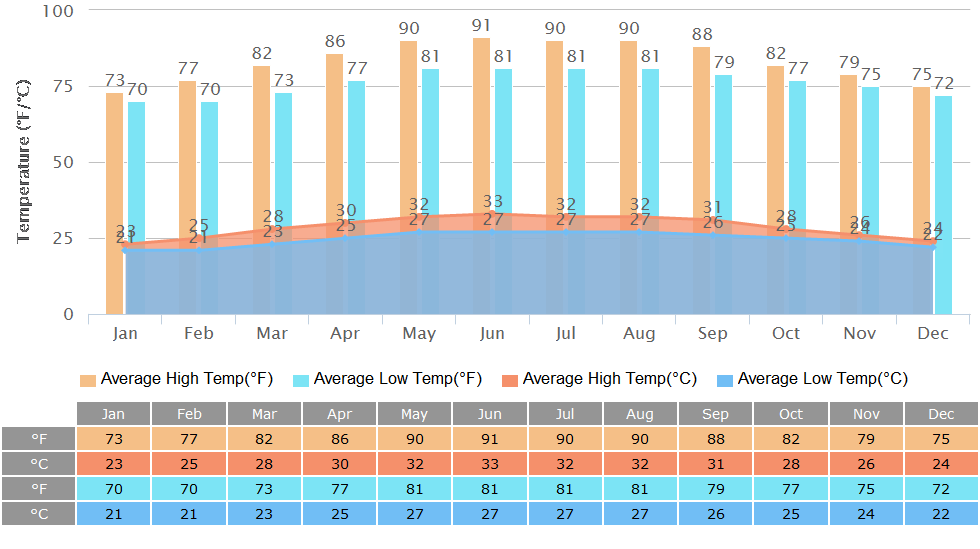
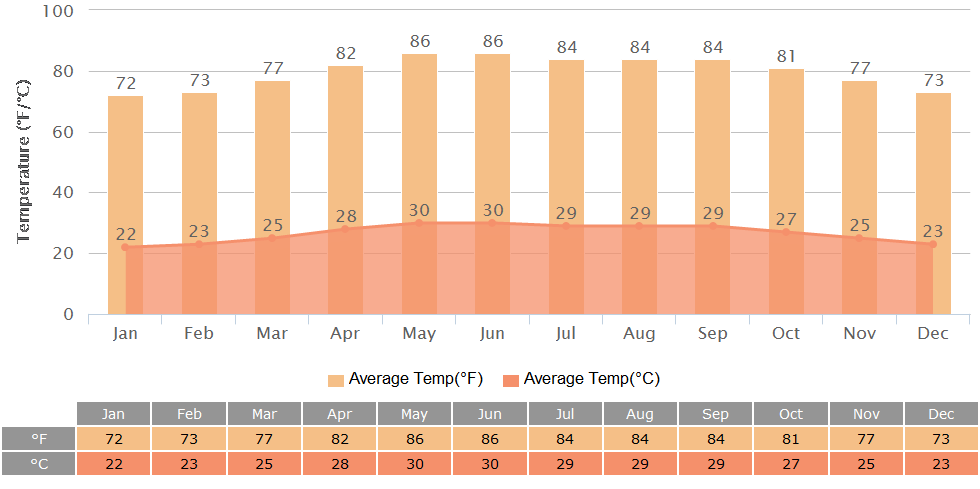
Thanks to the steady moderating effect of the ocean, Hoi An experiences gentle temperature fluctuations throughout the year, with overall mild and pleasant weather. Daytime maximum temperatures mostly hold between 25 and 30 degrees Celsius (77 - 86 degrees Fahrenheit), while nighttime minimum temperatures range from 21 to 25℃ (70 - 77℉). Even so, slight but perceptible variations can still be felt across the year.
|
|
|
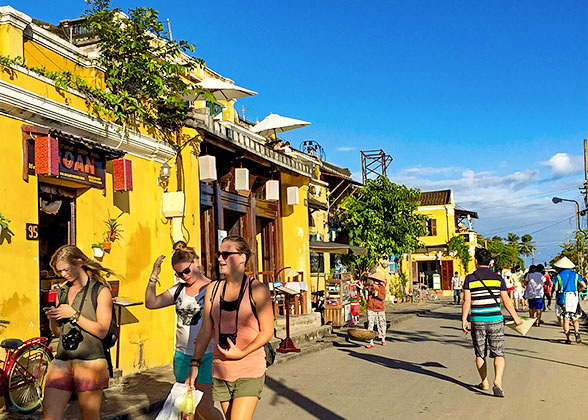
When is the coolest time in Hoi An?
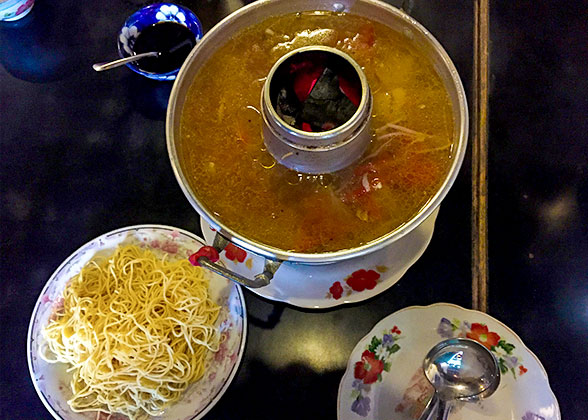
December to February is the relatively cooler time of the year in Hoi An, with daytime highs around 25℃ (77℉) and nighttime lows at roughly 21℃ (70℉). Even at noon, enjoying authentic Vietnamese hot pot at a street-side restaurant will not leave you sweating heavily. Furthermore, a light jacket is advisable for morning and evening outings, as the sea breeze carries a gentle coolness.When is the hottest time in Hoi An?
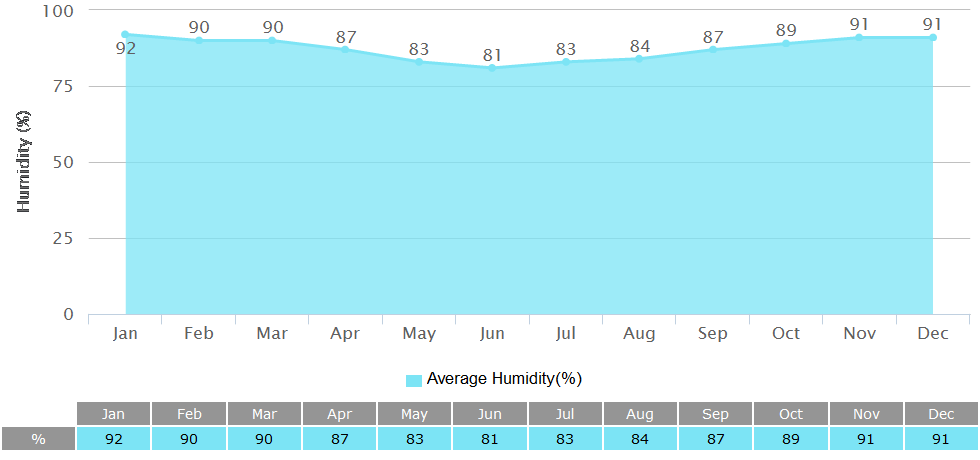
In contrast, April to August is the hottest period in Hoi An. Daytime temperatures generally hover around 33℃ (91℉) and can reach 40°C (104℉) during extreme conditions. Combined with humidity above 80%, you will feel as if wrapped tightly in a warm, damp towel, with strong feelings of stuffiness and stickiness. Carrying a small portable fan will significantly improve your comfort while out and about. Overnight lows drop to around 27℃ (81℉), which means early mornings or evenings are a better time for long-time explorations of the ancient town, only leaving you with a light sweat.Precipitation
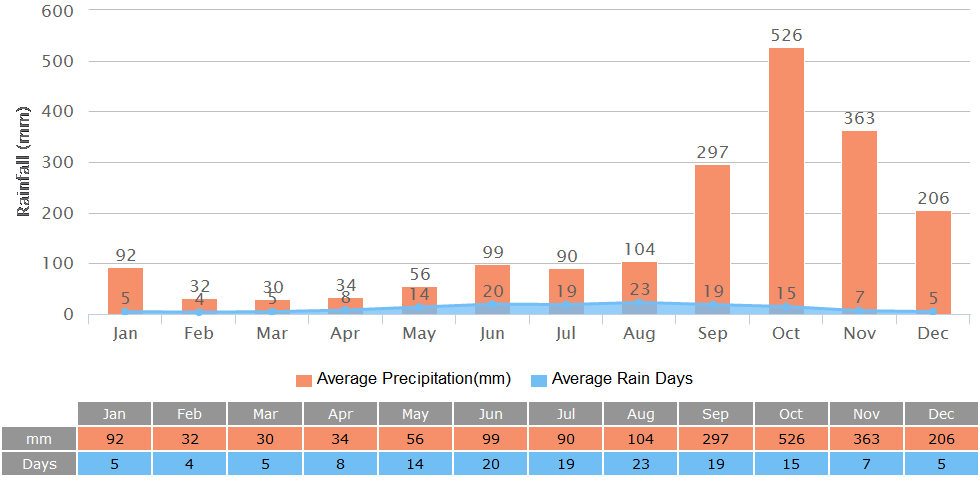
Rainfall in Hoi An is concentrated in the rainy season from August to December. During this period, average monthly precipitation generally exceeds 200 mm, with over 15 rainy days each month. The rain at this time is not only heavy but also often long-lasting, sometimes pouring continuously for an entire day. If you happen to be caught in such weather, your planned visits to My Son Sanctuary and beaches will all be ruined, leaving you stuck in your hotel waiting for the rain to stop.
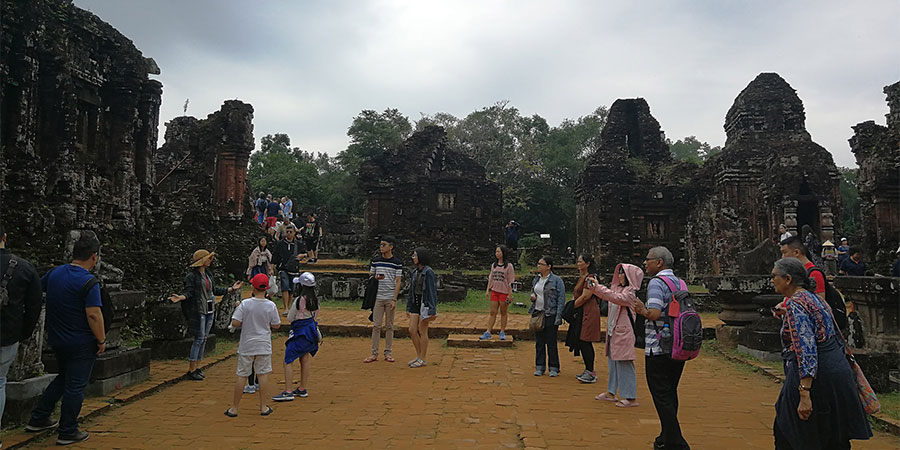
My Son Sanctuary Before Rain
|
It should be noted that the rainy season often brings floods. Statistics show that Hoi An has experienced more than 20 major floods over the past 10 years, during which Lantern Street was even submerged like a river. However, there is no need to feel discouraged if you encounter such climate conditions - the locals have long been accustomed to it and even find joy amid hardship, and you may even see people floating lanterns in the floodwater. Moreover, floods have never caused the ancient town to close for a long time. Once the water recedes, residents and visitors quickly clean the streets and repair minor damages, and life returns to normal in no time.
Correspondingly, Hoi An experiences its dry season from January to July each year. But it doesn’t mean there is no rain during this period. The average number of rainy days per month is only around 10, with monthly rainfall staying below 100 mm. Rain during this period is almost all short convective showers, which will barely disrupt your travel plans. Often, by the time you take shelter in a street-side cafe and finish a cup of local Vietnamese coffee, the rain outside will pass and the sky will clear up.
Typhoon Season
Hoi An’s typhoon mainly occurs in September to December each year. According to meteorological records over the past five years, the region is substantially affected by 3 to 4 typhoons annually on average, with October and November as the peak period of typhoon activity. In extreme cases, 2 to 3 typhoons may hit within a single month.Typhoons can also trigger flooding, and the resulting damage is often more severe than that from ordinary rainfall alone. For example, Typhoon Kalmaegi in 2025 brought more than 1,000 mm of precipitation to Hoi An and its surrounding areas within 24 hours. Floodwater submerged numerous houses up to their rooftops, forcing local residents and tourists to evacuate urgently.
Ultraviolet Radiation
Hoi An has intense ultraviolet radiation year-round, with the UV index often reaching Level 11 or higher. At midday, the harsh, glaring sunlight often makes it hard to keep your eyes open. Exposure to such strong UV rays can damage eyesight, so wearing sunglasses is essential when going out. You should also apply sunscreen and carry a parasol to protect your skin from sunburn.

Thu Bon River Under Blazing Sun
|
January February March AprilMayJune JulyAugustSeptember OctoberNovemberDecember
Best Time to Visit Hoi An
January to April is the best time to visit Hoi An. Weather conditions during this period are nearly perfect: daytime highs rarely exceed 30℃ (86℉) and lows stay above 21℃ (70℉), making it neither cold nor hot. There is a little rainfall and no risk of typhoons, so your travel plans are highly unlikely to be disrupted by sudden climate changes. With plentiful sunshine and clear, bright light, it is ideal for all kinds of outdoor activities and photography throughout the day.What to Wear for Visiting Hoi An
For your trip to Hoi An in 2026, clothing recommendations are based on local weather conditions: From December to February, when temperatures are lower, pack shirts, long-sleeved T-shirts, light hoodies, jeans, and casual pants; for rainy days or when sea breezes are strong in the early mornings and evenings, simply add a light jacket or thin cardigan. During the rest of the year, focus on short-sleeved T-shirts, short-sleeved shirts, shorts, skirts, dresses, and thin pants; a sun protection shirt is a good extra layer for occasional cool spells - it provides light warmth while shielding you from UV rays.For footwear, we recommend bringing sneakers, casual shoes or hiking shoes for long hours of outdoor walking. Sandals and flip-flops are also essential for beach activities and boat trips on the lake.
Kind Reminders:
1. Hoi An has high humidity year-round, so quick-dry clothing is highly recommended.
2. Even in hot weather, long trousers or long dresses are required when visiting temples and other religious sites out of respect.
Travel Advices and Tips
1. Although the dry season sees scarce rainfall, short afternoon showers still occur. It’s recommended to carry a foldable umbrella that can protect you from both the sun and sudden downpours. In addition, the midday heat from April to August can be intense, so try to avoid long outdoor activities during this time. Instead, you can relax at small street-side shops in the ancient town, or experience hands-on crafting at local handicraft stores.2. Before traveling during the rainy season, be sure to check weather forecasts and flood warnings. Try to avoid low-lying riverside accommodation to prevent being unable to check in due to flooding. Moreover, during this period, the Thu Bon River has high water levels. Water activities such as boat trips and floating lantern releases may be rescheduled temporarily, so it is advisable to confirm arrangements in advance.
3. It is highly recommended to avoid traveling during typhoon-affected periods. Typhoons usually have a significant impact on Hoi An, as they can not only completely disrupt your travel plans but also pose certain safety risks.